
Diharapkan dengan adanya media jurnal online ini akan menambah khasanah pengetahuan dan tukar menukar informasi ilmiah terutama hasil-hasil penelitian yang akan menjadi refrensi pengembangan ilmu pengetahuan khsusnya dibidang pendidikan.
Journals
-

Ihya Ulum: Early Childhood Education Journal
Ihya Ulum: Early Childhood Education Journal is a research-based journal that contains the latest issues in educational development in the field of Early Childhood Education. This journal is published by the Makassar Islamic University in collaboration with the Indonesian Association of Early Childhood Education Journal Managers (PPJ PAUD Indonesia).
This journal aims to publish and disseminate the results of research and studies on education. The articles published are the results of research or thoughts in the field of education conducted by researchers, teachers, and educational practitioners. This journal is published periodically three times a year, namely March, July and November.
E-ISSN 2962-8504
-

ISOLEK: Jurnal Pendidikan, Pengajaran, Bahasa, dan Sastra
ISOLEK: Jurnal Pendidikan, Pengajaran, Bahasa, dan Sastra menerbitkan manuskrip penelitian dalam Pendidikan, Pengajaran, Bahasa, Sastra, dan Linguistik. Jurnal ISOLEK menampilkan kebaruan penelitian dan signifikansi untuk kemajuan ilmiah di salah satu bidang manuskrip yang diterbitkan. Jurnal ini menerima kiriman dari seluruh dunia dan juga dari Indonesia.
Naskah yang diterbitkan termasuk.
Ilmu bahasa; fonologi, morfologi, sintaksis, analisis wacana, psikolinguistik, sosiolinguistik, dan analisis wacana kritis.
Sastra: kajian sastra daerah, sastra Indonesia, kajian sastra asing, sastra anak, kajian sastra pendidikan karakter, dan kajian sastra lainnya.
Bahasa dan Sastra Indonesia: pengembangan kurikulum, metode pembelajaran, materi pembelajaran, media pembelajaran, penilaian, pembelajaran bahasa Indonesia lintas kurikulum, teknologi informasi dan komunikasi dalam pembelajaran bahasa Indonesia, keterampilan berbahasa, dan analisis pembelajaran bahasa Indonesia lainnya.
Naskah yang dikirimkan pada jurnal ISOLEK belum pernah dipublikasikan di manapun, baik cetak maupun elektronik. Penulis harus mengacu pada pedoman penulis sebelum mengirimkan naskah. Naskah yang dikirimkan kemudian akan dievaluasi dan disunting sesuai dengan format yang disediakan pengelola jurnal.
ISOLEK diterbitkan dua kali setahun, setiap bulan Maret dan September oleh Program Studi Pendidikan Bahasa dan Sastra Indonesia, Fakultas Keguruan dan Ilmu Pendidikan, Universitas Islam Makassar. Artikel yang dipublikasikan dapat diakses dan diunduh secara gratis melalui Portal Jurnal Elektronik FKIP Universitas Islam Makassar.
E-ISSN 2985-6256
-

ALENA : Journal of Elementary Education
ALENA : Journal of Elementary Education is a journal published by the Elementary School Teacher Education Study Program, Faculty of Teacher Training and Education, Makassar Islamic University. This journal aims to publish and disseminate the results of research and studies on education. Articles published in journals are the result of research or thinking in the field of education carried out by researchers, teachers and educational practitioners. This journal is published regularly twice a year, namely January and July.
-

TEKNOS: Jurnal Pendidikan dan Teknologi
TEKNOS : Jurnal Pendidikan dan Teknologi adalah jurnal yang diterbitkan oleh Program Studi Pendidikan Teknologi Informasi Fakultas Keguruan dan Ilmu Pendidikan Universitas Islam Makassar. Jurnal ini bertujuan untuk menerbitkan dan menyebarluaskan hasil penelitian. Artikel yang dimuat dalam jurnal adalah hasil penelitian atau pemikiran bidang pendidikan dan teknologi yang dilakukan oleh peneliti, dosen, guru, mahasiswa dan praktisi pendidikan. Jurnal ini terbit secara berkala sebanyak dua kali dalam setahun yaitu bulan April s.d Desember.
E-ISSN 2987-257X
-

VERBA: Journal of English Language Issues, Trends and Studies
VERBA: Journal of English Language Issues, Trends and Studies is a journal published by the English Education Department, Faculty of Teacher Training and Education, Universitas Islam Makassar. This journal aims to publish and disseminate the results of research and studies on English. The published Articles are the results of research or thought in the field of English studies conducted by researchers, teachers, and education practitioners. This journal publishes three times a year in January, May, and September.
-
Ihya AlHikam: Journal of Early Childhood Learning
Focus and Scope
Ihya AlHikam: Journal of Early Childhood Learning is an international, peer-reviewed, open-access journal dedicated to advancing the study of pedagogy, instructional design, and holistic learning environments for young children (ages 0–8 years). The journal serves as a global platform for researchers, teacher educators, and practitioners to publish high-quality empirical studies and conceptual papers that explore innovative teaching practices and the cultivation of child character.
The journal places a distinct emphasis on the spirit of Ihya—reviving the innate potential (fitrah) and ethical character of young children through contextual, meaningful, and culturally responsive learning experiences.
The journal welcomes original research articles using diverse methodologies (qualitative, quantitative, mixed methods, action research, and developmental research) within, but not limited to, the following core areas:
1. Early Childhood Instructional Design and Pedagogy
Innovative teaching models, strategies, and methodologies in early childhood classrooms (e.g., project-based learning, play-based learning, inquiry-based learning).
The integration of technology, digital media, and interactive learning tools in early childhood education.
Classroom action research (PTK) focused on improving learning outcomes, student engagement, and teaching efficacy.
2. Character and Social-Emotional Learning
Strategies and practices for nurturing moral values, ethics (adab), and spiritual growth in young children.
Social-emotional development, emotional regulation, and peer interactions in early learning settings.
The development and evaluation of character education curricula and schoolwide behavioral support programs.
3. Contextual Learning and Indigenous Wisdom
The integration of local wisdom, cultural heritage, and traditional games into early childhood learning environments.
Ethno-pedagogical approaches that utilize local values to foster community engagement and cultural identity in young learners.
Contextual learning materials and media developed from local and sustainable resources.
4. Learning Materials, Media, and Environment
Design, development, and evaluation of instructional media, toys, and learning materials for young children.
The impact of physical, digital, and psychological learning environments on children’s cognitive and social development.
Assessment and evaluation tools used to measure teaching quality and children’s learning progress.
Scope Restrictions (What We Do Not Publish)
To maintain a clear academic boundary and avoid overlap with our sister journal, Ihya Ulum, this journal does not publish articles that focus strictly on broad educational policies, macro-management of early childhood institutions, general health/nutrition (such as stunting policies), or broad sociology of childhood without a direct connection to active classroom learning or pedagogy.
-
Ihya Ummah: Journal of Early Childhood and Community Engagement
Focus and Scope
Ihya Ummah: Journal of Early Childhood and Community Engagement is an international, peer-reviewed, open-access journal dedicated to publishing high-quality, impactful, and sustainable community engagement initiatives, participatory action research, and social interventions in the field of early childhood. The journal adopts the spirit of Ihya Ummah (reviving and empowering the community), serving as a bridge between academic insights and real-world social action to support the holistic development, well-being, and rights of young children (ages 0–8 years).
The journal invites original articles, field reports, and program evaluations from academics, practitioners, and community activists that demonstrate collaborative efforts between higher education institutions and society. We welcome submissions utilizing various participatory methodologies (e.g., Participatory Action Research [PAR], Asset-Based Community Development [ABCD], and Service-Learning) within the following core areas:
1. Teacher Empowerment and Institutional Capacity Building
Training, workshops, and continuous professional development programs aimed at enhancing early childhood educators' pedagogical, digital, and professional competencies.
Assistance in school accreditation, school-wide curriculum transformation, and the implementation of innovative teaching media in underserved or rural early childhood centers.
Community-based management and governance models for early childhood education (ECE) institutions.
2. Family Dynamics, Parenting Education, and Islamic Child Rearing
Community education and empowerment programs designed to strengthen parental involvement in early literacy, numeracy, and character building at home.
Interventions fostering family resilience, psychological well-being, and positive parenting practices in the digital era.
Implementation of Islamic educational values (such as Al-Ghazali’s perspectives on teacher-parent collaboration and child ethics) within modern family counseling and parenting programs.
3. Community Health, Childhood Nutrition, and Stunting Interventions
Community-driven advocacy, maternal education, and practical interventions focused on tackling stunting, malnutrition, and promoting healthy lifestyles for young children.
Collaborative programs with local health centers (Posyandu), family welfare movements (PKK), and child-protection agencies to monitor and improve child well-being.
Mental health awareness, psychosocial support, and safety initiatives for children in vulnerable environments.
4. Cultural Preservation and Local Wisdom-Based Engagement
Revitalization of traditional games, regional folklore, oral literature, and local arts through community partnerships to nurture moral values and cultural identity in young children.
Utilization of local natural and cultural assets to establish sustainable learning media or boost the economic independence of local early childhood centers.
Ethno-parenting and ethno-pedagogical community programs that adapt indigenous community wisdom into contemporary child-rearing practices.
Scope Restrictions (What We Do Not Publish)
To maintain its identity as a community engagement journal, Ihya Ummah does not accept purely laboratory-based experiments, theoretical literature reviews without field applications, or standard classroom action research (PTK) that does not involve broader community or parental stakeholders (such topics should be directed to Ihya Athfal).
-
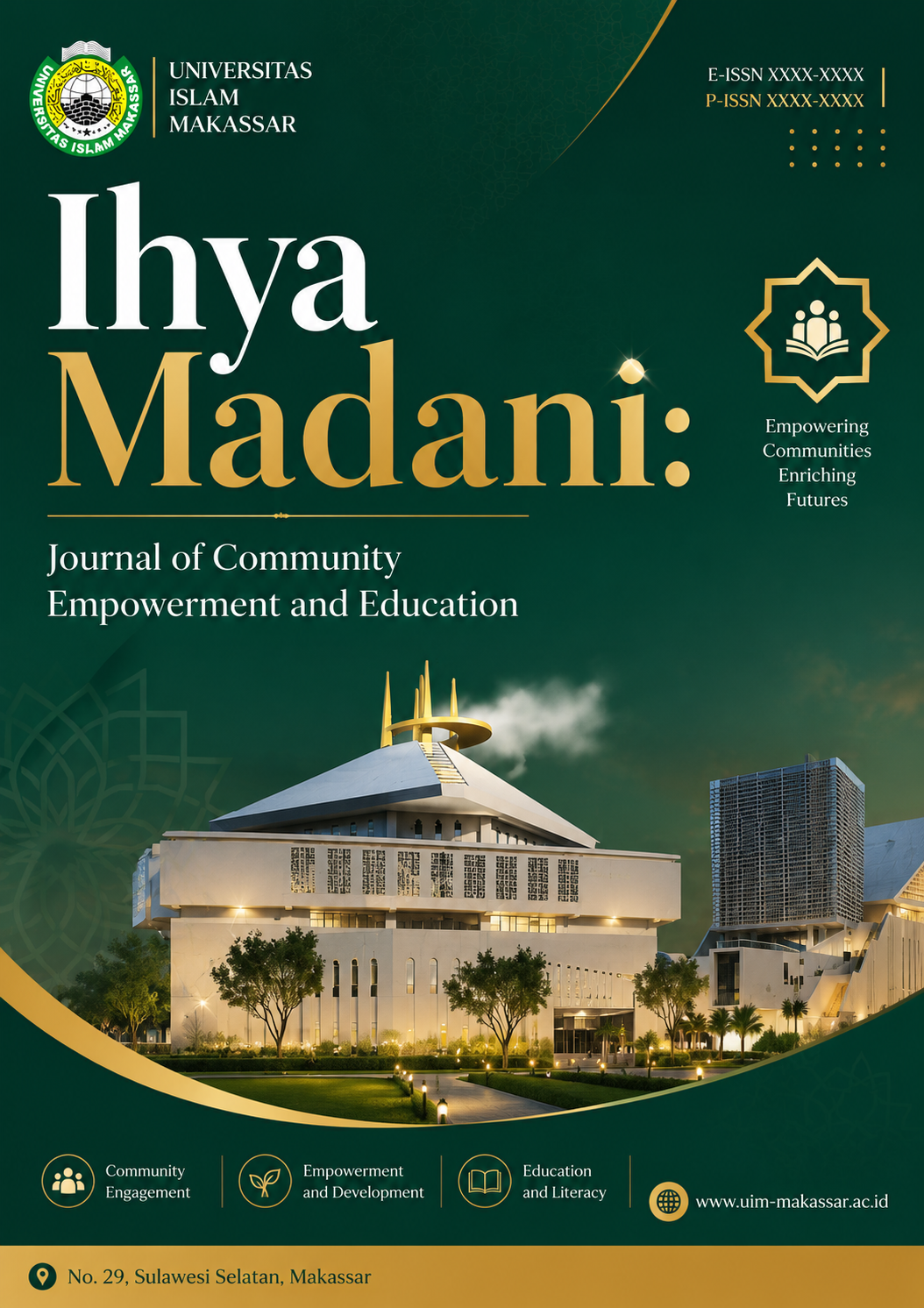
Ihya Madani: Journal of Community Empowerment and Education
Focus and Scope
Ihya Madani: Journal of Community Empowerment and Education is an international, peer-reviewed, open-access journal dedicated to publishing high-quality, transformative, and sustainable community engagement initiatives, participatory action research, and social interventions in the field of education. The journal adopts the spirit of Ihya Madani (reviving and nurturing an educated, civilized, and empowered society), serving as a premier platform for academics, practitioners, and community builders to share impactful field experiences that bridge educational theory and sustainable social development.
The journal welcomes original articles, field reports, and program evaluation studies that demonstrate genuine collaboration between higher education institutions, schools, non-formal learning centers, and the community. We prioritize submissions that employ participatory methodologies (e.g., Participatory Action Research [PAR], Asset-Based Community Development [ABCD], Service-Learning, and CBR) within the following core areas:
1. Educational Empowerment and Teacher Capacity Building
Community-driven professional development, training, and workshops designed to enhance schoolteachers' and community educators' pedagogical, professional, and digital competencies.
Collaborative assistance in curriculum development, technology integration, and instructional media creation for underserved, rural, or marginalized educational institutions.
Capacity-building initiatives for early childhood centers (PAUD/RA), primary education (SD/MI), secondary education, and non-formal learning spaces (PKBM).
2. Family Empowerment, Parenting Education, and Lifelong Learning
Community literacy and numeracy programs, adult education, and lifelong learning initiatives tailored for community development.
Parenting education programs, family resilience interventions, and positive child-rearing practices to optimize child development and character building at home.
Implementation of holistic educational values (such as Al-Ghazali’s perspectives on moral cultivation and parent-teacher synergy) into contemporary family counseling and community counseling.
3. Public Health Advocacy, Nutrition, and Social Well-being in Education
Community-based educational interventions focused on public health advocacy, childhood nutrition, sanitation, and stunting prevention.
Collaborative training and empowerment programs involving community health centers (Posyandu), family welfare programs (PKK), and educational institutions to foster healthy, safe, and child-friendly village ecosystems.
Psychosocial support, mental health awareness, and educational safety nets for vulnerable children and marginalized families.
4. Culturally Responsive Community Engagement and Local Wisdom
Revitalization of traditional arts, folklore, indigenous knowledge, and local wisdom through educational community partnerships to strengthen character and cultural identity.
Utilization of local assets and natural resources to establish eco-friendly learning tools or enhance the economic and operational self-reliance of local community schools.
Ethno-pedagogical and community-based actions that integrate local ethics and cultural heritage into modern community empowerment frameworks.
Scope Restrictions (What We Do Not Publish)
To preserve its focus as a community engagement journal, Ihya Madani does not accept purely laboratory experiments, clinical trials, theoretical literature reviews without field applications, or standard classroom action research (PTK) that is strictly restricted to regular classroom teaching without broader community or stakeholder engagement.
